We didn't add AI.
We started with it.
Volumental was founded by computer vision researchers. Today AI runs through everything we ship: the scan, the measurement, the recommendation, and the operations behind them.
The dataset nobody else is positioned to collect.
Raw scan counts are not the moat. What matters is what each record holds: a precise 3D foot, linked to a specific shoe style, captured at the moment of purchase, with consent. That pairing of body and outcome is what fit intelligence learns from, and collecting it requires three things at once: hardware on the sales floor, presence at the transaction, and shopper consent at scale.
We have been assembling exactly that since 2012, across 3,000+ stores in 60+ countries. Every scan improves the models that measure the next one, and every fitting improves the recommendations behind the next purchase.

average reduction in fit-related returns for retailers running our fit recommendations.
Fleet-wide average across retailers using Volumental fit recommendations. Ask us for the methodology and we will walk through it on your own categories and return data.
Six systems between a foot and the right shoe.
Everything below runs in production today, more than six million times a year.
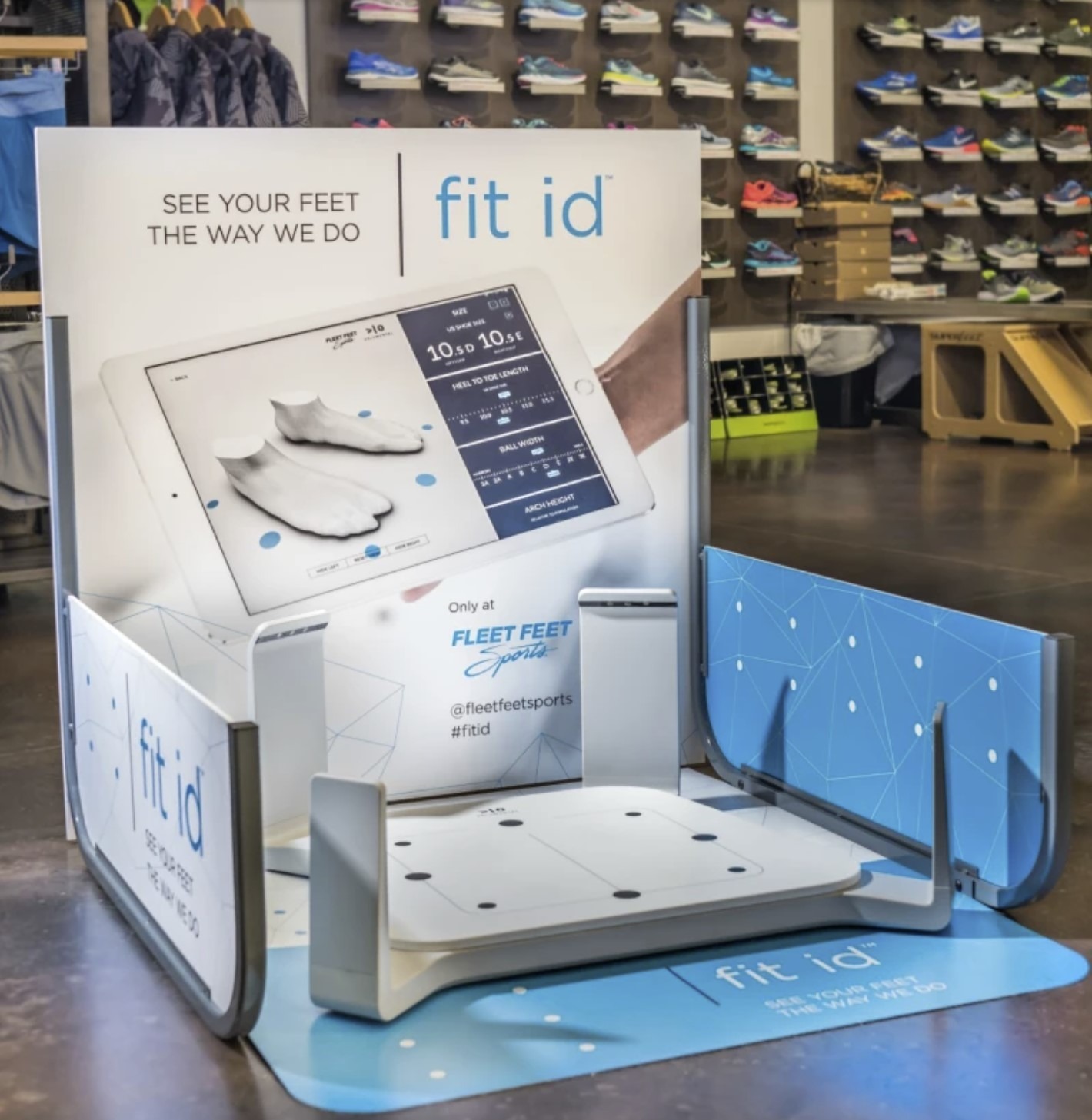
A millimeter-precise 3D model of your foot in seconds.
In store, depth cameras capture your feet from multiple angles and our vision pipeline reconstructs the full shape: length, width, arch height, instep, heel. No human judgment in the loop, so two scans of the same foot agree.

Phone scanning built on vision networks we trained ourselves.
Our mobile scanner runs deep neural networks for keypoint detection and semantic segmentation: they find your toe, heel, instep and arch in ordinary photos and separate foot from floor and clothing. Trained on our own annotated scan data, not off-the-shelf weights.
Our models know what a foot looks like.
From millions of 3D scans we have learned a statistical model of the human foot. Fitting it to each new capture is what turns a handful of phone images into a trustworthy measurement, and it is why accuracy holds up outside the lab.
We render training data no human could label.
Alongside millions of real annotated scans, our rendering pipeline generates synthetic feet with pixel-perfect labels for points human annotators cannot mark reliably. That combination is how the networks keep improving.
Recommendations trained on how shoes actually fit.
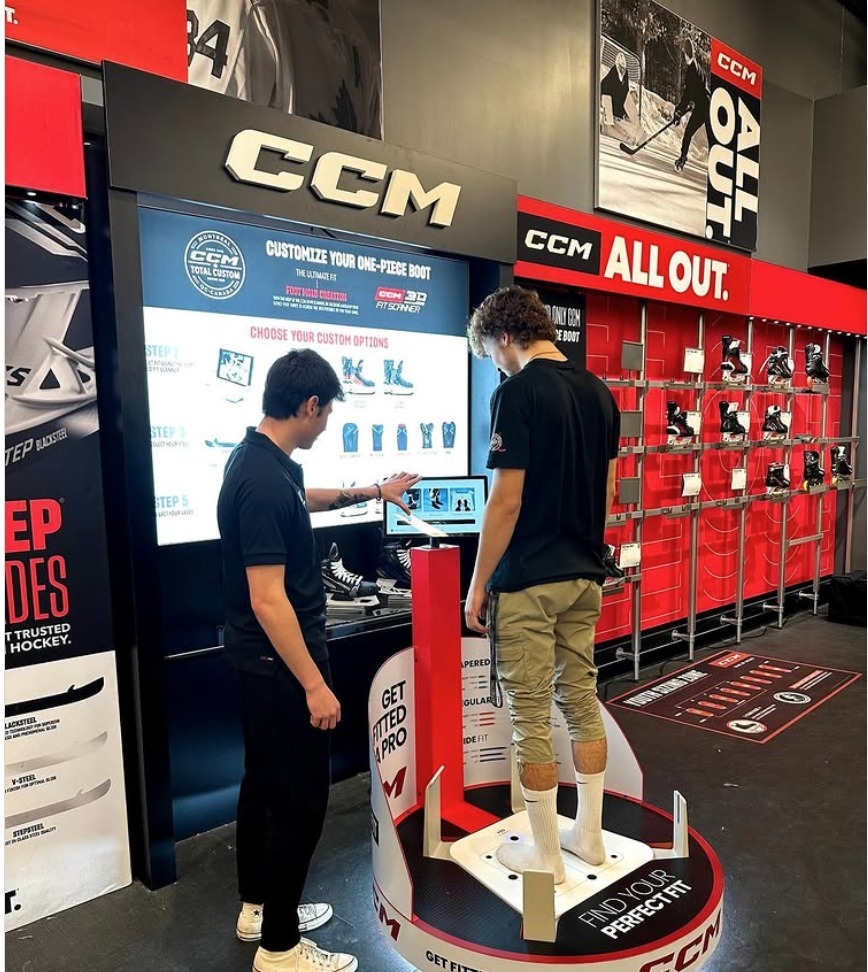
Foot shape alone does not pick a shoe. The Fit Engine matches your measurements against how specific styles fit real feet, learned across tens of millions of fitting moments, and recommends the size and model that will fit you.
Every scanner checks itself, every scan.
Our fleet auto-calibrates continuously instead of waiting for a technician with a reference object. A scan in Stockholm and a scan in Seattle are measured to the same standard, across 3,000+ stores in 60+ countries.
We publish our science. Judge for yourself.
Our research team published the largest foot morphology study of its kind, an analysis of 1.2 million 3D foot scans across North America, Europe and Asia, in Nature Scientific Reports. It changed how brands think about widths, lasts and regional sizing.
An independent study at Texas A&M University-San Antonio tested repeatability: whether the scanner returns the same measurement for the same foot, scan after scan, even before and after exercise. Reliability scores exceeded 0.90 on every measured dimension, the threshold researchers class as excellent.
A fit profile belongs to the person it describes.
Foot scans are body data, and we treat them that way. Every profile is captured with the shopper's consent, processed under GDPR, and used to serve the shopper first: their profile travels with them between brands, stores, and devices, instead of being locked inside any one retailer's system.
That consent architecture is not compliance overhead. It is what makes the dataset usable, by us and by the AI systems shoppers will bring with them, in a way scraped or incidental data never can be.
An AI-first company, not just an AI product.
We hold ourselves to the same standard we sell. AI agents work alongside our team every day: drafting and shipping marketing, monitoring our scanner fleet, triaging support diagnostics, and processing orders.
The result is an operating model, not a demo: 62 people run a fleet across 3,000+ stores in 60+ countries. Roughly fifty stores per employee, because software does the repetitive work and people do the judgment.
The fit layer for agent-mediated shopping.
Agent-mediated commerce is being standardized right now: UCP for discovery, ACP for checkout, AP2 for payment authorization. Those protocols let a shopper's agent find, negotiate, and pay. None of them can supply the one input a footwear purchase depends on: an accurate measurement of the buyer's feet.
That is the layer we built. Consented fit profiles already move through our APIs into partner systems every day; serving them to a shopper's own assistant is the same interface with a new consumer. And we are not betting on agents replacing conversation: whatever surface a shopper uses to ask "will this fit me?", human or machine, the answer has to stand on captured, calibrated fit data. We are the measurement layer underneath all of them.
Computer vision research
Founded in Stockholm out of computer vision research, with roots at KTH and NASA's Jet Propulsion Laboratory. The first product was the scan itself.
Fit intelligence in production
Scanning, sizing, and recommendations running live in 3,000+ stores and on shoppers' phones, delivered by API to partner systems.
The fit layer for AI
Accurate, consented fit data that people's own AI assistants can query when they shop.
See the models work on your own feet.
Scan your feet with the phone in your hand, or book a demo and we will show you the scan, the data, and the recommendation, live.
Try the phone scanner Book a demo