Volumental has scanned 80M+ feet across 3,000+ stores in 60+ countries. Most of those scans did their first job in the moment: helping one person find one shoe that fits. But aggregated, they form something the footwear industry has never had before, a population-scale picture of what feet actually look like. And that picture disagrees with the assumptions most shoes are still built on.
Length is not the only important foot measurement
Sizing systems are built on length, but length alone does not determine fit. Two styles of the same size can differ substantially in ball width, instep height, heel width, and toe box volume. A mismatch in any of these areas can make an otherwise correct size feel wrong. Our research shows that a single width per size leaves more than 50% of the population without a well-fitting option, yet today most footwear is offered in exactly that: one width per size. Scan data makes those distributions visible per market, per category, per customer population, and they are wider than standard width offerings acknowledge.
Lasts encode assumptions, and assumptions go unquestioned
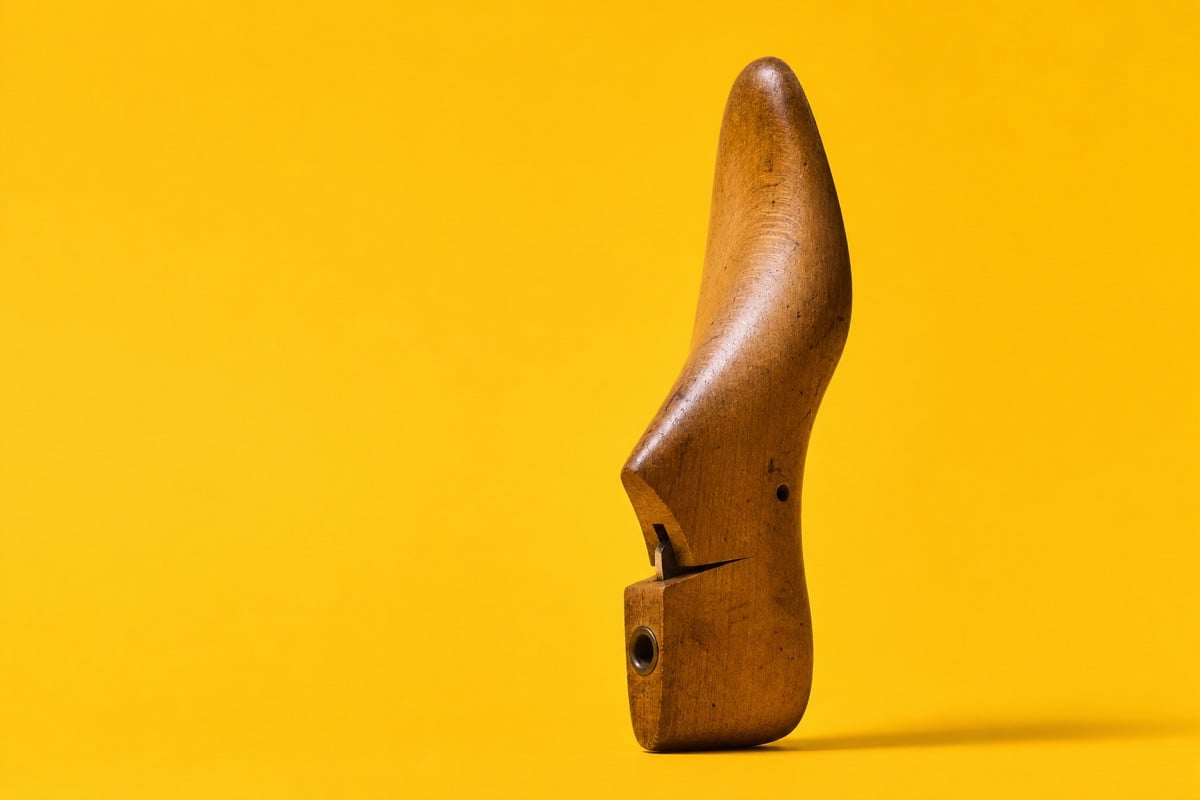
A last is the physical form (traditionally wood, today often plastic) around which a shoe is assembled. It defines the shoe's interior shape and, by extension, how well it fits a human foot. Most lasts in active use today share a basic geometry that has not fundamentally changed in decades; what changes is the toe shape, trimmed or squared to match current fashion. The underlying fit architecture stays frozen.
Why? The person who designed the last may long since have left the company, taking with them any knowledge of what foot data, if any, informed that design. Some brands have copied a competitor's last without understanding the materials or construction of the shoe that was produced with the last. And fit is not determined by last shape alone: upper material, padding and inlay thickness, design elements: all impact fit in ways that are rarely modelled when the last is designed or updated.
Grading compounds the problem. Traditional grading tables scale a last linearly across the size run, but measured feet do not scale linearly. Proportions shift across sizes and differ by gender. A last that fits well at the sample size can drift out of fit at the ends of the run, which is exactly where linear assumptions are weakest.
What this looks like in practice
Red Wing's IronFlex work boot, launched this spring, was built on the scan data of 3 million tradesworkers collected in Red Wing's own stores. The analysis showed their customers needed volume added at the waist and instep of the existing 601 last, and over 1,000 micro-adjustments later, wear testers reported a 50 percent improvement in fit satisfaction. The testers themselves were recruited by scan geometry rather than self-reported size, so the feedback came from feet that genuinely represented the target population. We told that story in full in our IronFlex article.
The IronFlex is one boot, but the method generalizes. Lululemon built its first running shoe designed for women on aggregated data from more than a million women's foot scans, and adidas used our women-specific insights to develop the Ultraboost 22. The same data answers a brand's recurring design questions: whether a new last matches the intended population, where an existing last needs modification, how a size run should actually grade, and which fit testers to trust.
Design from the measured foot
Footwear development has always been craft plus assumption. The craft remains essential. The assumptions are now optional, because the feet a brand designs for can be measured instead of imagined. For the science behind data-driven last design, read Ales Jurca's technical article, Breaking the Mold. And if your brand runs a scanning program, your design answers may already be in your own stores. Let's look at what your data can do.